
It seems like one day your Yorkie is zooming around the house like a tiny tornado, and the next, they’re spending a little more time napping in their favorite bed.
If you’ve noticed changes in your Yorkie’s energy, behavior, or appearance, you may be wondering if they’re simply getting older.
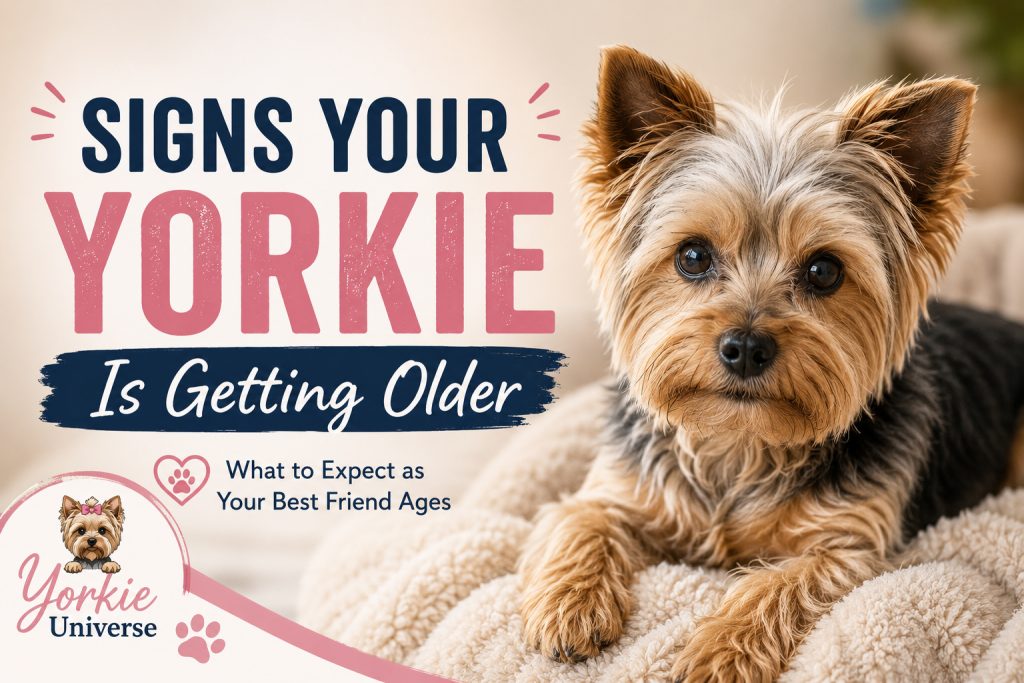
Most Yorkies are considered seniors around 8 to 10 years old. Common signs of aging include sleeping more, slowing down on walks, hearing or vision loss, gray hair, stiffness, weight changes, and increased anxiety. While many of these changes are normal, sudden or severe symptoms should always be evaluated by a veterinarian.
The good news is that many age-related changes are completely normal. Just like people, Yorkies slow down as they age. Understanding what to expect can help you keep your furry friend comfortable, healthy, and happy during their golden years.
Let’s look at some of the most common signs that your Yorkie is getting older.
When Is a Yorkie Considered a Senior?
Most Yorkies are considered seniors around 8 to 10 years of age, although many live well into their teens.
Some Yorkies seem to age slowly and stay active for years, while others begin showing signs of aging a little earlier. Every dog is different, but there are some common changes many owners notice as their Yorkie gets older.
1. Your Yorkie Sleeps More
One of the first things many owners notice is that their Yorkie spends more time sleeping.
Senior dogs simply don’t have the same energy reserves they once did. Long naps become more frequent, and your Yorkie may not be as eager to play for extended periods.
As long as your dog still enjoys normal activities and wakes up easily, extra sleep is usually nothing to worry about.
However, sudden lethargy or extreme tiredness should always be discussed with your veterinarian.
2. They Slow Down on Walks
Does your Yorkie stop more often during walks?
Do they seem less interested in chasing toys or running around the yard?
A gradual decrease in activity is a normal part of aging. Older dogs often tire more easily and may need shorter walks and more frequent breaks.
That doesn’t mean exercise should stop altogether. Regular gentle activity helps keep joints flexible and muscles strong.
3. Their Hearing May Not Be What It Used to Be
Many senior Yorkies experience some degree of hearing loss.
You may notice that your dog:
- Doesn’t respond when called
- Sleeps through noises that once woke them
- Seems startled when you approach
- Doesn’t react to the doorbell anymore
If you suspect hearing loss, avoid startling your dog and consider using hand signals along with verbal commands.

4. Changes in Vision
Just like hearing, eyesight often declines with age.
Signs of vision loss may include:
- Bumping into furniture
- Hesitating on stairs
- Difficulty finding toys
- Cloudy-looking eyes
- Becoming more cautious in unfamiliar places
Many dogs adapt surprisingly well to vision changes when their environment remains consistent.
I have 2 blind dogs, and they both have adjusted very well. One of them, because his blindness came on gradually, adjusted so well that you wouldn’t realize he is blind if you didn’t know it.
The other one’s blindness came on overnight, and it has taken him longer to adjust, but he did adjust.
5. Gray Hair Around the Face
One of the easiest signs to spot is graying fur.
You may notice:
- Silver hairs around the muzzle
- Lighter fur around the eyes
- Overall coat fading
Not every Yorkie grays noticeably, but many develop some silver or white hairs as they age.
6. Weight Changes
Some senior Yorkies gain weight because they’re less active.
Others lose weight due to dental problems, illness, or reduced appetite.
It’s important to monitor your Yorkie’s weight regularly since sudden changes can sometimes indicate an underlying health issue.
If your dog is losing weight without explanation, schedule a veterinary checkup.
7. Dental Problems Become More Common
Yorkies are already prone to dental disease, and age can make these issues worse.
Watch for:
- Bad breath
- Red gums
- Loose teeth
- Difficulty chewing
- Dropping food while eating
Regular dental care becomes even more important as your Yorkie gets older.
8. Stiffness and Joint Pain
Many senior Yorkies develop arthritis or age-related joint stiffness.
You may notice:
- Difficulty jumping onto furniture
- Trouble climbing stairs
- Stiffness after naps
- Reluctance to exercise
- Slower movements
Fortunately, there are many ways to help senior dogs stay comfortable, including joint supplements, ramps, orthopedic beds, and veterinary treatments.


9. Changes in Appetite
Some older Yorkies become pickier eaters.
Others simply don’t need as many calories as they did when they were younger.
However, a significant decrease in appetite should never be ignored, especially if it lasts more than a day or two.
10. More Frequent Bathroom Accidents
If your previously housetrained Yorkie starts having accidents, age may be a factor.
Possible reasons include:
- Weaker bladder muscles
- Cognitive decline
- Arthritis is making it harder to reach the door
- Underlying medical conditions
Never assume accidents are “just old age.” It’s always worth discussing them with your veterinarian.
11. Increased Anxiety or Clinginess
Some senior Yorkies become more attached to their owners.
You may notice your dog:
- Following you everywhere
- Becoming anxious when left alone
- Wanting more physical contact
- Seeking reassurance more often
Changes in hearing, vision, and cognitive function can sometimes make older dogs feel less secure.
12. Signs of Cognitive Decline
Canine cognitive dysfunction, sometimes called dog dementia, can affect older dogs.
Possible signs include:
- Wandering aimlessly
- Staring at walls
- Getting stuck behind furniture
- Confusion
- Changes in sleep patterns
- Forgetting familiar routines
While cognitive decline can’t be cured, early intervention may help slow progression and improve quality of life.
How to Help Your Senior Yorkie Thrive
Getting older doesn’t mean your Yorkie can’t enjoy a wonderful life.
Here are a few ways to support your aging companion:
- Schedule regular veterinary checkups
- Keep up with dental care
- Maintain a healthy weight
- Provide comfortable bedding
- Use ramps for furniture and stairs
- Continue gentle daily exercise
- Keep routines consistent
- Offer mental stimulation through games and puzzle toys
Small adjustments can make a huge difference in your Yorkie’s comfort and happiness.


When to Call the Vet
While many age-related changes are normal, some symptoms should never be ignored.
Contact your veterinarian if your Yorkie experiences:
- Sudden weight loss
- Severe lethargy
- Difficulty breathing
- Persistent pain
- Refusal to eat
- Frequent falls
- Sudden blindness
- Significant behavior changes
Early diagnosis often leads to better outcomes.
Final Thoughts
Watching your Yorkie grow older can be bittersweet. The puppy who once raced through the house may now prefer a warm blanket and a sunny spot for an afternoon nap.
But getting older doesn’t mean your Yorkie’s best days are behind them.
With proper care, regular veterinary visits, and plenty of love, many senior Yorkies continue to enjoy happy, comfortable lives for years to come.
The most important thing is paying attention to changes, adapting to your dog’s needs, and making the most of every precious day together.
FAQ
At what age is a Yorkie considered a senior?
Most Yorkies are considered seniors between 8 and 10 years old, although many remain active well beyond that age.
Do Yorkies sleep more as they get older?
Yes. Senior Yorkies often sleep more because they have lower energy levels and need more time to recover from daily activities.
Why is my older Yorkie following me everywhere?
Older Yorkies may become more attached due to changes in hearing, vision, confidence, or cognitive function. Many seek extra comfort and reassurance as they age.
Is it normal for senior Yorkies to shake?
Mild shaking can occur due to cold temperatures, anxiety, arthritis, or age-related weakness. Sudden or severe shaking should be discussed with your veterinarian.
How can I make my senior Yorkie more comfortable?
Provide a comfortable bed, maintain a healthy weight, schedule regular vet visits, support joint health, use ramps when needed, and continue gentle exercise and mental stimulation.


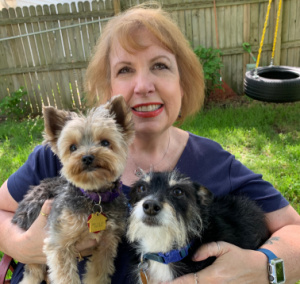

Cathy Bendzunas
Dog Blogger, Former Dog Groomer
I have adored Yorkies for well over 50 years. As a young adult, I began to show and breed them. Now, I just write about them and have several in my little pack of small dogs.
I have had dogs all my life and have trained as a dog groomer. I also have been a kennel worker, worked in a pet hotel through PetSmart, and still am a pet sitter.
Check out my bio for more information about me.
