Has your sweet little Yorkie ever growled when you tried to take away a toy… or hovered protectively over their food bowl?
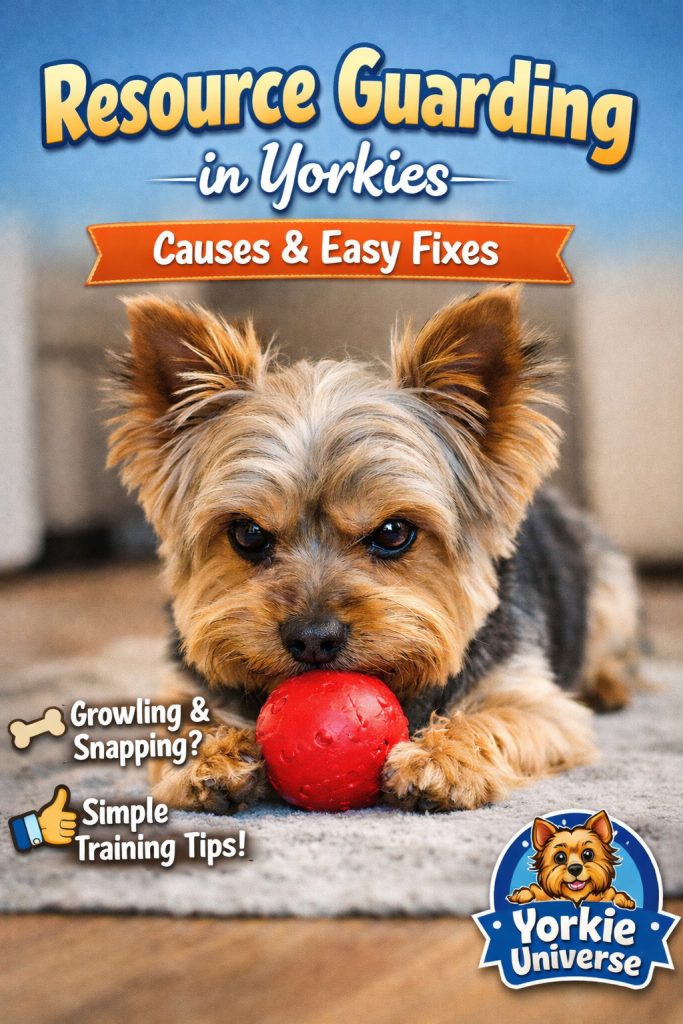
If so, don’t panic—you’re not dealing with a “bad dog.” You’re dealing with something called resource guarding, and it’s actually pretty common in small dogs (especially confident little personalities like Yorkies).
The good news? With the right approach, you can absolutely improve this behavior.
What Is Resource Guarding?
Resource guarding is when a dog tries to protect something they see as valuable.
That “resource” could be:
- Food or treats
- Toys or bones
- A favorite spot (like the couch or your lap)
- Even you
Signs of resource guarding include:
- Growling
- Snapping or air biting
- Freezing or stiffening
- Eating faster when you get close
- Giving you “the look” 😅
It can range from mild to more serious—but catching it early makes a big difference.
Why Do Yorkies Resource Guard?
Yorkies may be tiny, but they have big instincts.
Common reasons include:
- Instinct: Dogs naturally protect valuable things
- Insecurity: They’re worried something will be taken away
- Past experiences: Especially in rescues or rehomed dogs
- Lack of boundaries: If they’ve learned that guarding “works”
Sometimes, it’s simply personality. Yorkies are bold, confident little dogs!
The Most Important Rule: Don’t Punish It
This is so important.
If you punish a Yorkie for growling, you might stop the growl—but not the feeling behind it. That can actually lead to biting without warning later.
👉 Growling is communication. It’s your Yorkie saying, “I’m uncomfortable.”
Instead of punishing, focus on building trust.
Resource guarding in Yorkies is when a dog becomes protective over food, toys, or people, often showing signs like growling, snapping, or stiff body language. It usually comes from instinct or insecurity, not bad behavior. The best way to fix it is through positive training—using trade-ups, trust-building, and consistent routines—rather than punishment, which can make the problem worse.
How to Fix Resource Guarding (Step-by-Step)
1. Start With “Trade, Don’t Take”
Instead of grabbing something away, offer something better.
Example:
- Trade a toy for a treat
- Swap a bone for a higher-value reward
This teaches your Yorkie:
👉 “When humans come near my stuff, good things happen!”
2. Teach “Drop It” and “Leave It”
These commands are lifesavers.
Keep training sessions short and positive:
- Use treats that your Yorkie really loves
- Reward immediately when they comply
- Practice when things are calm—not during guarding moments
3. Hand-Feed Occasionally
Hand-feeding builds trust and reduces food guarding.
Try:
- Feeding part of their meal from your hand
- Dropping treats into the bowl while they’re eating
This helps your Yorkie feel safe when you’re near their food.
4. Approach = Good Things
Walk by your Yorkie while they’re eating or chewing and casually drop a treat.
No pressure. No grabbing.
Over time, they’ll start thinking:
👉 “Oh, good, here comes my person… I might get something extra!”
5. Manage the Environment
Set your Yorkie up for success.
That might mean:
- Feeding in a quiet, low-traffic area
- Picking up high-value items when not supervised
- Avoiding situations that trigger guarding
Management isn’t failure—it’s smart training.
6. Be Consistent With Boundaries
Yorkies can get a little… bossy 😄
Make sure:
- Everyone in the home follows the same rules
- Your Yorkie isn’t allowed to “claim” people or spaces
- Rewards are earned with calm behavior
Consistency builds confidence and reduces guarding.
Special Case: When Your Yorkie Guards You
1. Get Them Off Your Lap (Temporarily)
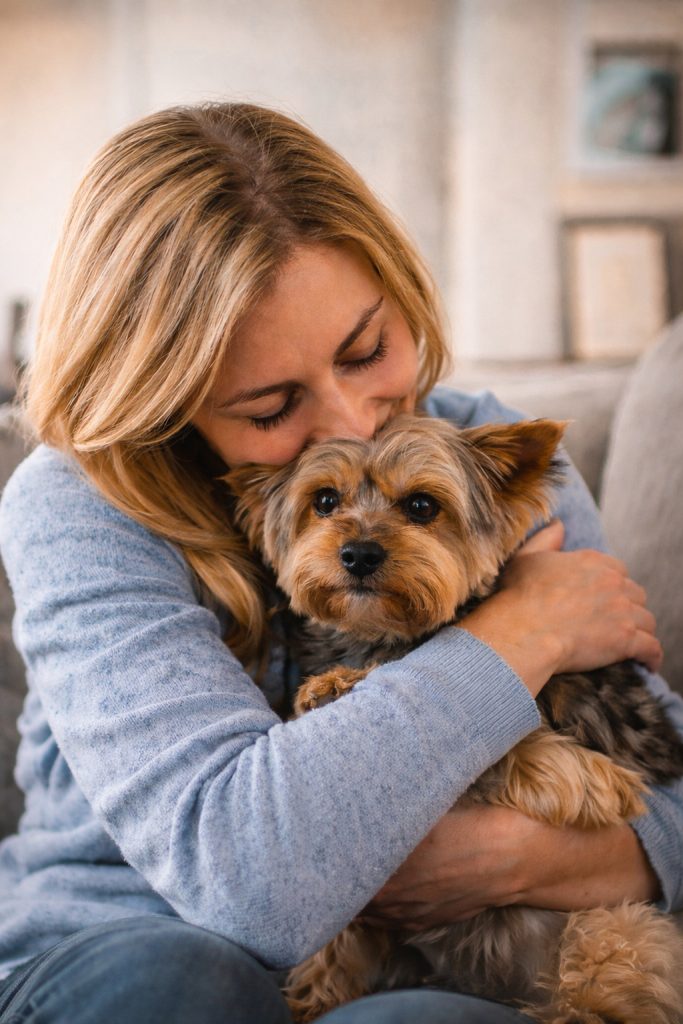
Some Yorkies don’t just guard food or toys—they guard their person.
It might feel a little flattering at first (“aww, they love me!”), but this behavior can quickly turn stressful—and even unsafe.
This can look like:
- Growling when someone gets too close to you
- Jumping between you and another person
- Snapping if someone tries to hug or touch you
- Acting overly protective when you’re sitting or holding them
Try this:
- If your Yorkie starts guarding while on your lap, calmly place them on the floor
- No scolding—just neutral removal
👉 This teaches: guarding = loss of the “resource”
2. Don’t Reward the Behavior
It’s easy to accidentally reinforce guarding.
Avoid:
- Petting them when they growl at someone
- Picking them up when they act protective
- Reassuring them in an anxious tone
Even gentle attention can say, “Good job protecting me!”
3. Reward Calm Behavior Around Others
This is where the real progress happens.
When someone approaches:
- If your Yorkie stays calm → reward immediately
- Keep treats nearby for these moments
👉 You’re teaching: people coming near = good things happen
4. Practice Controlled “Approach” Exercises
Have a trusted person help you.
Step-by-step:
- Sit with your Yorkie nearby (not on your lap)
- Have someone slowly approach
- Before your Yorkie reacts, give treats
- Gradually decrease the distance over time
Keep it slow and positive—no rushing.
5. Teach a “Place” or “Settle” Command
This gives your Yorkie a job that isn’t guarding you.
- Train them to go to a bed or mat
- Reward calm staying behavior
- Use it when guests come over
👉 Structure reduces anxiety.
6. Build Independence
Yorkies that are too attached are more likely to guard.
Encourage:
- Time resting away from you
- Independent play
- Not being carried everywhere
You’re helping them feel safe—even when they’re not glued to you.
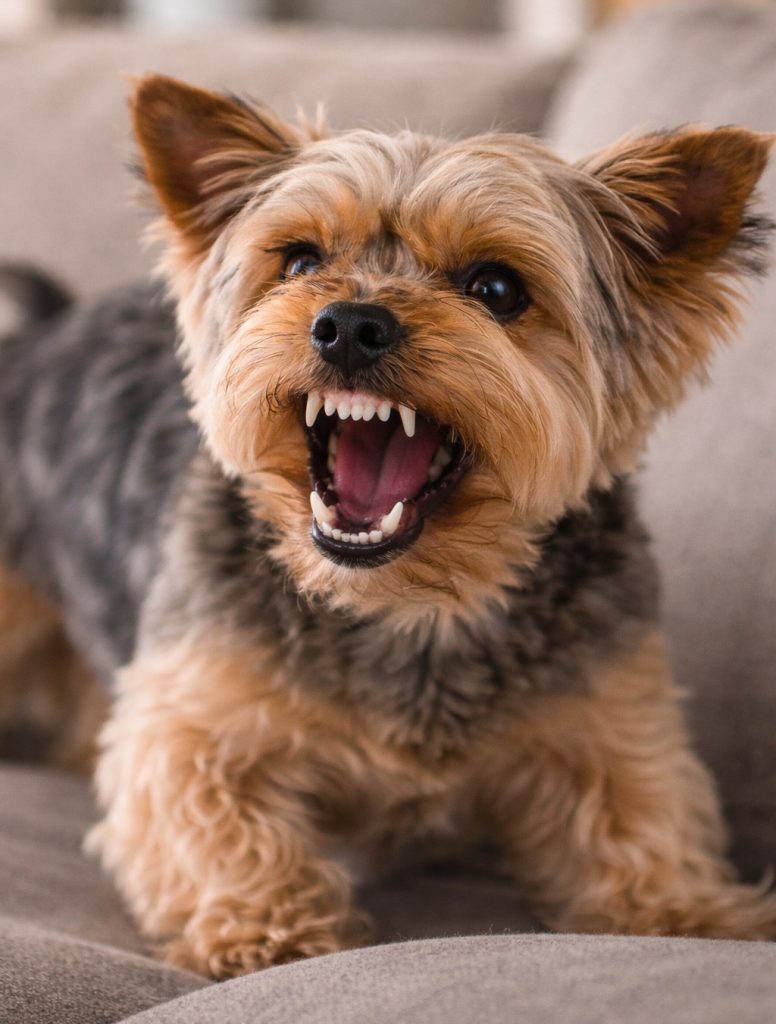
What NOT to Do
❌ Don’t punish growling
❌ Don’t force interactions
❌ Don’t let them “practice” guarding repeatedly
❌ Don’t laugh it off (it usually escalates over time)
When to Get Help
If your Yorkie:
- Snaps and growls when someone approaches you and the behavior doesn’t improve after consistent training
- Guards you in multiple situations
- Shows escalating behavior
It’s best to work with a professional trainer or behaviorist.
Helping Your Yorkie Feel Safe Without Guarding You
When your Yorkie stops guarding you, it’s not because they love you less—it’s because they finally feel safe enough to relax.
A Yorkie guarding you isn’t being “loyal”—they’re feeling unsure and trying to control the situation.
With the right training, you can help your Yorkie relax, trust others, and still be the loving, devoted companion you adore—just without the tiny bodyguard attitude. 💙🐾
When to Be Extra Careful
If your Yorkie:
- Has bitten or tried to bite
- Guards multiple things intensely
- Gets worse instead of better
It’s a good idea to work with a professional dog trainer or behaviorist.
There’s no shame in getting help—it can make a huge difference.
A Quick Note About Kids and Resource Guarding
If you have children in the home:
- Never let kids take food or toys from your Yorkie
- Teach them to respect the dog’s space
- Always supervise interactions
This keeps everyone safe and stress-free.
Final Thoughts
Resource guarding can feel scary at first, but it’s really just your Yorkie trying to feel safe and in control.
With patience, positive training, and a little consistency, most Yorkies can learn to relax and trust that their favorite things aren’t going anywhere.
And once that trust builds? You’ll see a calmer, more confident little companion—and a lot fewer “side-eye” moments. 💙🐾
❓ FAQ Section
Why is my Yorkie suddenly resource guarding?
Sudden resource guarding can happen due to stress, changes in routine, aging, or feeling insecure. Even small changes—like a new pet, new home, or schedule shift—can trigger it.
Is resource guarding normal in Yorkies?
Yes, resource guarding is a natural instinct in dogs, including Yorkies. It doesn’t mean your dog is aggressive—it just means they feel the need to protect something valuable.
Should I take things away from my Yorkie to stop guarding?
No. Taking items away can make guarding worse. Instead, use a “trade” approach by offering something better so your Yorkie learns that giving things up is a good experience.
Can resource guarding be trained out completely?
In many cases, yes—or at least greatly improved. With consistent, positive training, most Yorkies learn to feel more secure and stop guarding behaviors.
What should I do if my Yorkie growls at me?
Don’t punish the growl. Instead, calmly back off and reassess the situation. Growling is a warning sign, and addressing the cause with training is more effective than correcting the behavior.
When should I get professional help?
If your Yorkie is snapping, biting, or guarding multiple things intensely, it’s best to work with a professional dog trainer or behaviorist to safely address the issue.
Can puppies develop resource guarding, too?
Yes, Yorkie puppies can show early signs of resource guarding. The good news is it’s often easier to correct early with proper training and positive reinforcement.


Cathy Bendzunas
Dog Blogger, Former Dog Groomer
I have adored Yorkies for well over 50 years. As a young adult, I began to show and breed them. Now, I just write about them and have several in my little pack of small dogs.
I have had dogs all my life and have trained as a dog groomer. I also have been a kennel worker, worked in a pet hotel through PetSmart, and still am a pet sitter.
Check out my bio for more information about me.