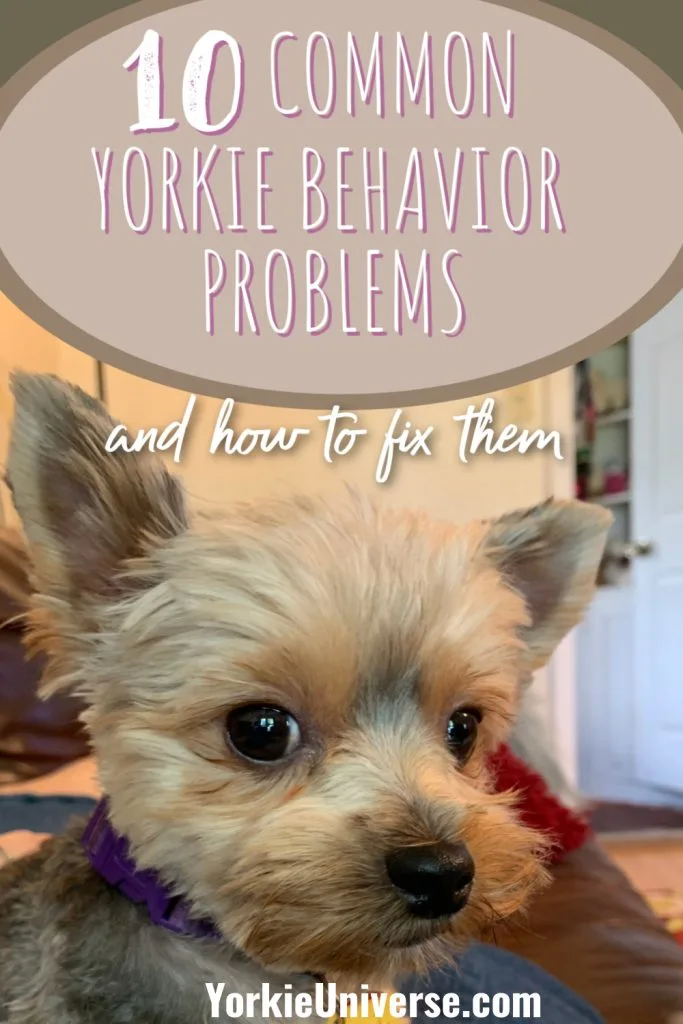
Yorkshire Terriers may be tiny, but their personalities are anything but. Yorkies are smart, loyal, opinionated little dogs—and sometimes that confidence can turn into behavior problems that leave you wondering, “Is it just my Yorkie?”


Good news: you’re not alone, and most Yorkie behavior issues are totally fixable with a little patience and the right approach. Let’s break down the 10 most common Yorkie behavior problems and what you can do to help.
1. Excessive Barking
The problem: Yorkies bark at everything—doorbells, squirrels, leaves, their own thoughts.
Why it happens: They’re alert, protective, and naturally vocal.
How to fix it:
- Teach a “quiet” command using treats
- Avoid yelling (it sounds like barking to them)
- Redirect attention with toys or training
- Make sure your Yorkie gets enough mental stimulation
👉 Bored Yorkies bark more. A tired Yorkie is a quieter Yorkie.


2. Separation Anxiety
The problem: Crying, pacing, and destructive behavior when you leave.
Why it happens: Yorkies bond hard with their people.
How to fix it:
- Practice short departures and build up slowly
- Leave calming music or TV on
- Give a special toy or treat only when you’re gone
- Avoid dramatic goodbyes
Consistency is key here—your Yorkie needs to learn that you always come back.
3. Potty Training Accidents
The problem: “Why is my Yorkie still having accidents?”
Why it happens: Small bladders + inconsistent schedules.
How to fix it:
- Stick to a strict potty routine
- Use positive reinforcement only
- Clean accidents thoroughly (odor triggers repeat behavior)
- Consider indoor potty options like pads or grass trays
Yorkies aren’t stubborn—they just need clarity.


4. Aggression Toward Other Dogs
The problem: Growling, snapping, or acting tough with bigger dogs.
Why it happens: Fear, insecurity, or lack of socialization.
How to fix it:
- Socialize early and often
- Don’t pick your Yorkie up every time another dog approaches
- Reward calm behavior around other dogs
- Avoid forcing interactions
Remember: confidence comes from feeling safe, not being protected from everything.
5. Resource Guarding
The problem: Growling over food, toys, or favorite people.
Why it happens: Instinct and insecurity.
How to fix it:
- Trade items instead of taking them
- Hand-feed occasionally to build trust
- Teach “drop it” and “leave it”
- Never punish guarding—it makes it worse
6. Jumping on People
The problem: Your Yorkie launches like a furry missile when guests arrive.
Why it happens: Excitement and attention-seeking.
How to fix it:
- Ignore jumping completely
- Reward calm greetings
- Ask guests to wait until all four paws are on the floor
Yes, it’s cute… until it isn’t.


7. Chewing on Everything
The problem: Shoes, furniture, cords—nothing is safe.
Why it happens: Teething, boredom, or anxiety.
How to fix it:
- Provide appropriate chew toys
- Rotate toys to keep them interesting
- Use deterrent sprays on off-limit items
- Increase exercise and mental play
8. Stubbornness (Selective Hearing 😅)
The problem: Your Yorkie hears you… and chooses to ignore you.
Why it happens: They’re smart and independent thinkers.
How to fix it:
- Keep training sessions short and fun
- Use high-value treats
- Be consistent with commands
- End sessions on a win
Yorkies respond best to positive motivation, not force.
9. Fearfulness
The problem: Shaking, hiding, or reacting strongly to noises or new situations.
Why it happens: Genetics, lack of early exposure, or past experiences.
How to fix it:
- Gradual exposure to new things
- Calm reassurance (without coddling)
- Create a safe space at home
- Avoid forcing scary situations


10. Bossy Behavior (“Small Dog Syndrome”)
The problem: Acting like they run the house (because… they might).
Why it happens: Inconsistent boundaries and lots of babying.
How to fix it:
- Set clear rules and stick to them
- Ask for a behavior before rewards
- Treat your Yorkie like a dog, not royalty
(Okay, slightly like royalty.)
Yorkies aren’t “bad dogs”—they’re big personalities in small bodies. Most behavior problems come from misunderstanding their needs, not from disobedience. With patience, consistency, and a little humor, your Yorkie can become a confident, well-mannered companion.
And hey—if your Yorkie still has a little attitude? That’s part of the charm. 💙🐶




Cathy Bendzunas
Dog Blogger, Former Dog Groomer
I have adored Yorkies for well over 50 years. As a young adult, I began to show and breed them. Now, I just write about them and have several in my little pack of small dogs.
I have had dogs all my life and have trained as a dog groomer. I also have been a kennel worker, worked in a pet hotel through PetSmart, and still am a pet sitter.
Check out my bio for more information about me.